Reviewed by Dr. Younghun Cho, PharmD
This product earns a high score for its proven effectiveness, elegant feel, and strong brand reputation, with minor points deducted for its premium price and use of chemical filters that may not suit everyone.
Pharmacist's Verdict
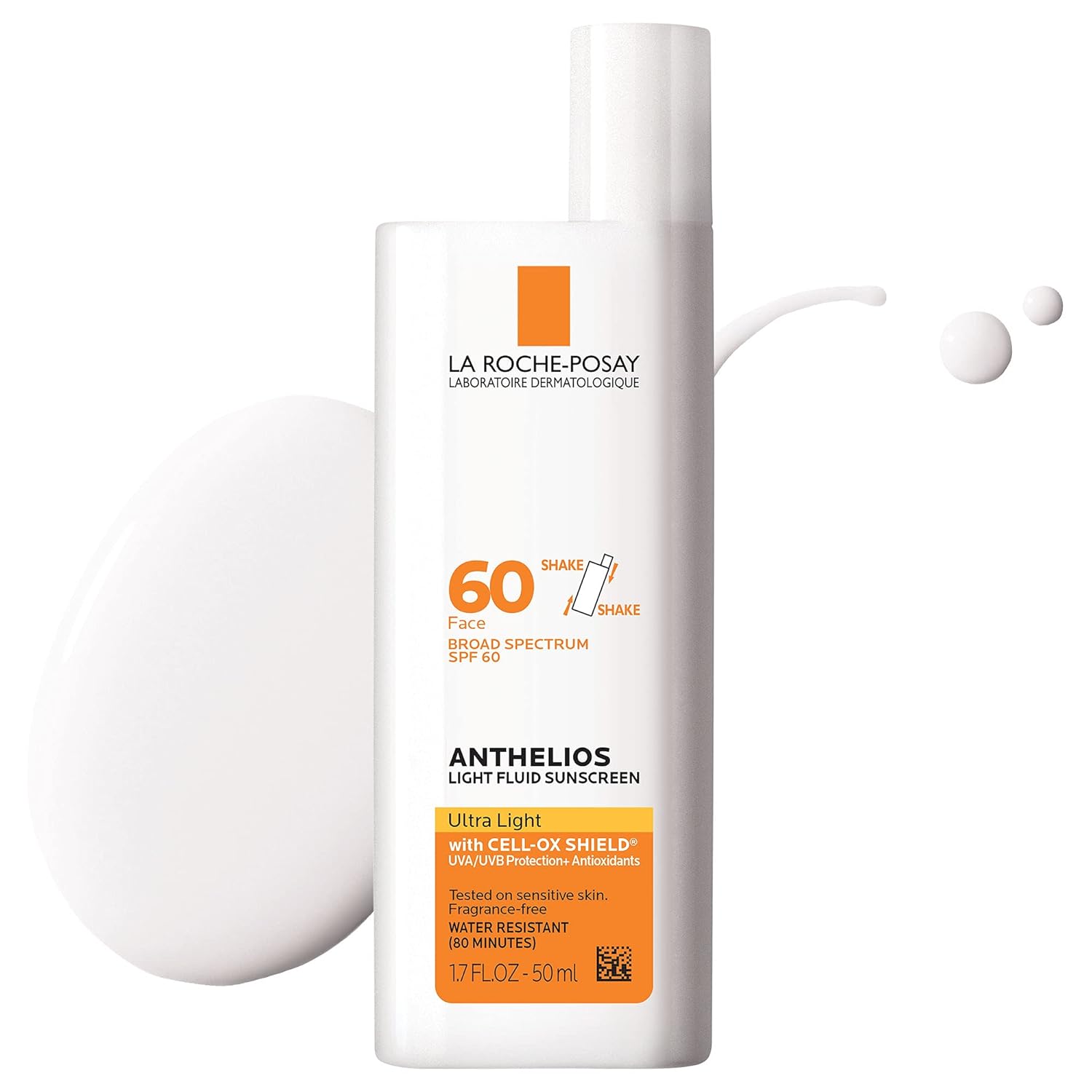
La Roche-Posay Anthelios SPF 60 is an excellent, lightweight chemical sunscreen that provides powerful, broad-spectrum protection, making it a top choice for daily use, especially for those with normal to oily skin.
Ingredient Analysis
Details pending pharmacist review.
Details pending pharmacist review.
Details pending pharmacist review.
Details pending pharmacist review.
Details pending pharmacist review.
Pros & Cons
Pros
- Offers high SPF 60 and broad-spectrum (UVA/UVB) protection.
- Very lightweight, non-greasy texture that absorbs quickly without a white cast.
- Water-resistant for up to 80 minutes, making it great for sports or swimming.
- Comes from a highly respected, dermatologist-recommended brand known for quality.
- Fragrance-free and oil-free, reducing the risk of irritation for many users.
Cons
- More expensive than many drugstore sunscreens.
- Uses chemical filters, which can cause irritation or allergic reactions in some people with very sensitive skin.
- Contains denatured alcohol, which can be drying for those with already dry or eczema-prone skin.
- Can sometimes "pill" or create small balls when layered with certain moisturizers or makeup.
References
- 1.FDA Drug Label — KIZO LAB UV DEFENSE CLEAR SUNSCREN SPF50
FDA DailyMed: KIZO LAB UV DEFENSE CLEAR SUNSCREN SPF50 · FDA
- 2.Sunscreens.
, 2006 · PubMed
- 3.Occurrence of major organic UV filters in aquatic environments and their endocrine disruption potentials: A mini-review.
Kwon B, Choi K, Integrated environmental assessment and management, 2021 · PubMed
- 4.The dual challenge of FDA-evaluated non-GRASE UV filters: Photostability and systemic absorption - A path toward safer and more effective sunscreens.
Safian MT, Raja PB, Muniandy K, et al., International journal of pharmaceutics, 2025 · PubMed
- 5.Mode of action approach supports a lack of carcinogenic potential of six organic UV filters.
Cohen SM, Boobis AR, Jacobson-Kram D, et al., Critical reviews in toxicology, 2025 · PubMed