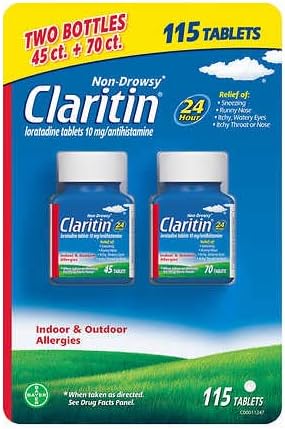
Is Claritin 24 Hour Allergy Relief Tablets, Loratadine 10 mg Safe?
Generic: Loratadine
Generally yes, Claritin 24 Hour Allergy Relief Tablets (loratadine 10 mg) are considered safe and effective for most adults and children aged 6 and older when used as directed. It is a non-drowsy antihistamine that provides relief from common allergy symptoms like sneezing, runny nose, and itchy eyes without causing significant sedation for most users.
Who Should Avoid or Consult First
- Children under 6 years old (unless directed by a doctor, as specific pediatric formulations exist)
- Individuals with severe liver disease, as they may require a lower dose or should consult a doctor
- People with kidney disease, who should consult a doctor before use
- Pregnant or breastfeeding women, who should consult a doctor before use
Common Side Effects
- Headache — reported in ~12% of users
- Drowsiness — reported in ~8% of users (though less common than older antihistamines)
- Fatigue — reported in ~4% of users
- Dry mouth — reported in ~3% of users
- Nervousness — reported in ~2% of users
Interactions to Watch For
These medications can increase the amount of loratadine in your body, potentially leading to more side effects.
Cimetidine can also increase loratadine levels, which might heighten the risk of side effects.
While Claritin is generally non-drowsy, combining it with alcohol or other central nervous system depressants can increase the risk of drowsiness or impaired coordination in some individuals.
People Also Ask
Is Claritin safe during pregnancy?
Loratadine is generally considered to have a low risk during pregnancy, categorized as Pregnancy Category B. However, it's always best to consult your doctor or pharmacist before taking any medication, including Claritin, if you are pregnant or planning to become pregnant.
Can I take Claritin every day long-term?
Yes, Claritin is generally safe for long-term daily use at the recommended dose for managing chronic allergy symptoms. If your symptoms persist or worsen despite regular use, it's advisable to consult a healthcare professional to rule out other conditions or adjust your treatment plan.
Can children take Claritin 10 mg tablets?
Claritin 10 mg tablets are typically approved for children 6 years of age and older. For younger children, specific liquid or chewable formulations with appropriate dosing are available, and you should always follow the product label or consult a pediatrician.
What happens if I drink alcohol with Claritin?
While Claritin is known for being non-drowsy, alcohol can still enhance any sedative effects it might have, especially in sensitive individuals. It's generally recommended to use caution or avoid alcohol when taking Claritin to prevent potential drowsiness or impaired judgment.
Bottom Line
Claritin 24 Hour Allergy Relief is a safe and effective option for most people seeking non-drowsy allergy relief. Always follow the dosing instructions carefully and consult a healthcare professional if you have underlying health conditions, are pregnant or breastfeeding, or experience persistent symptoms.
References
- 1.FDA Drug Label — allergy relief
FDA DailyMed: allergy relief · FDA
- 2.Allergic Rhinitis: A Review.
Bernstein JA, Bernstein JS, Makol R, et al., JAMA, 2024 · PubMed
- 3.Efficacy of different oral H(1) antihistamine treatments on allergic rhinitis: a systematic review and network meta-analysis of randomized controlled trials.
Hong D, Weng J, Ye M, et al., Brazilian journal of otorhinolaryngology, 2023 · PubMed
- 4.Acupuncture for allergic rhinitis: a systematic review and meta-analysis.
He M, Qin W, Qin Z, et al., European journal of medical research, 2022 · PubMed
- 5.Second-generation antihistamines: a comparative review.
Slater JW, Zechnich AD, Haxby DG, Drugs, 1999 · PubMed
- 6.Loratadine.
AlMasoud N, Bakheit AH, Alshammari MFM, et al., Profiles of drug substances, excipients, and related methodology, 2022 · PubMed
Want the full pharmacist analysis?
See full review of Claritin 24 Hour Allergy Relief Tablets, Loratadine 10 mgEducational content based on FDA labeling, published research, and pharmacist review. Not a substitute for individualized medical advice.