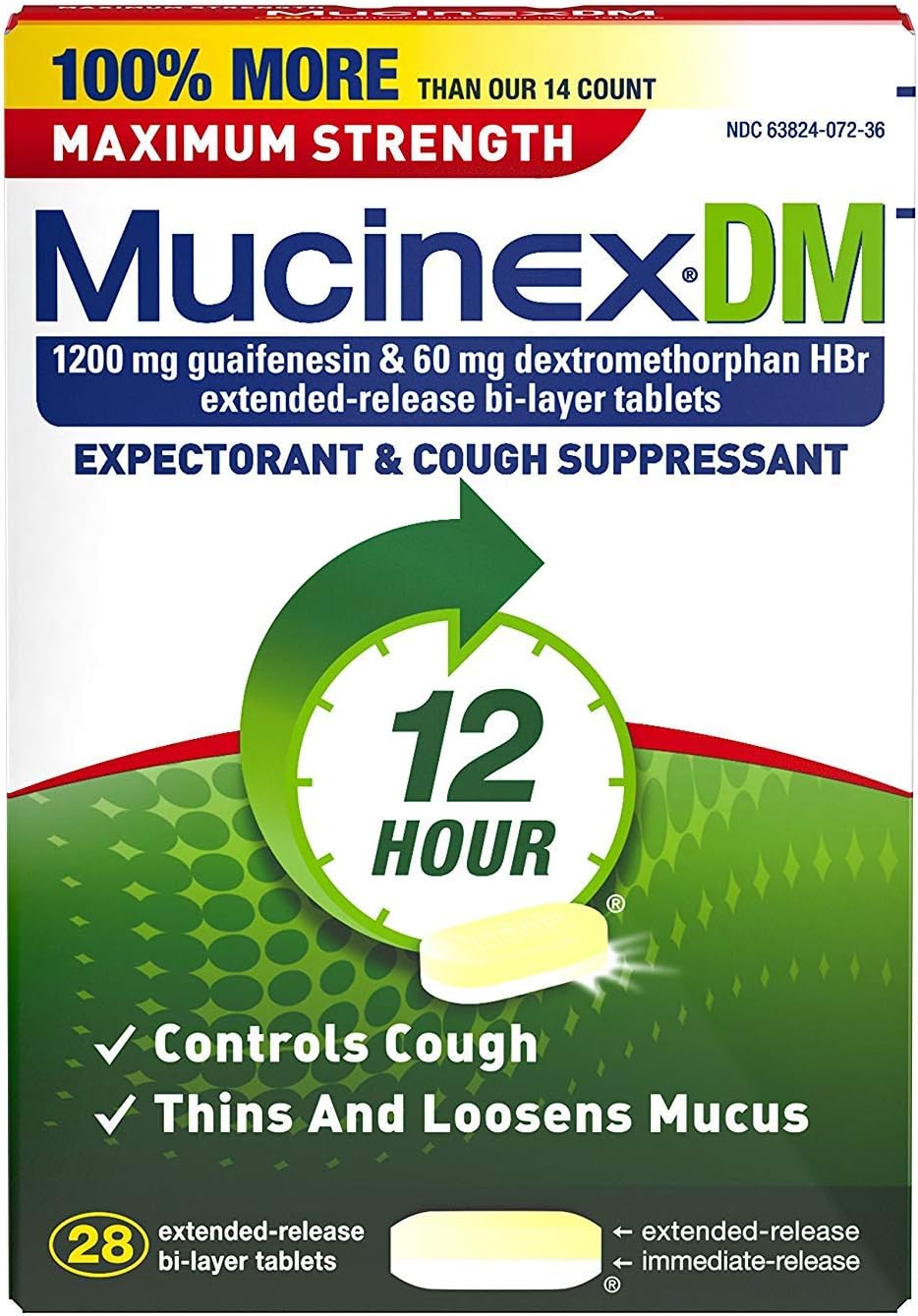
Is Mucinex DM Maximum Strength 12 Hour Expectorant & Cough Suppressant Tablets Safe?
Generic: Guaifenesin and Dextromethorphan HBr
Generally yes, Mucinex DM Maximum Strength is safe when used as directed to relieve chest congestion and cough. It combines an expectorant to thin mucus and a cough suppressant to reduce coughing. However, it's important to follow dosing instructions carefully and be aware of potential side effects and drug interactions.
Who Should Avoid or Consult First
- Children under 12 years old
- People currently taking or who have taken an MAOI (monoamine oxidase inhibitor) antidepressant within the last two weeks
- Individuals with chronic cough due to asthma, emphysema, or smoking, unless advised by a doctor
- Pregnant or breastfeeding women should consult a healthcare professional before use
- People with severe liver or kidney disease
Common Side Effects
- Dizziness
- Drowsiness
- Nausea or stomach upset
- Headache
Interactions to Watch For
Taking Mucinex DM with these medications can lead to a serious condition called serotonin syndrome, which can cause fever, agitation, and rapid heart rate.
Combining Mucinex DM with these medications can increase the risk of serotonin syndrome.
Alcohol can increase the drowsiness and dizziness caused by Mucinex DM, making it unsafe to drive or operate machinery.
People Also Ask
Can I take Mucinex DM while pregnant?
It is generally recommended that pregnant or breastfeeding women consult their doctor before taking Mucinex DM. While some ingredients may be considered low risk, a healthcare provider can assess your individual situation and advise on the safest options.
Is it safe to take Mucinex DM every day?
Mucinex DM is intended for short-term use to relieve temporary cough and congestion. Do not use it for more than 7 days without consulting a doctor, as a persistent cough could indicate a more serious underlying condition. Long-term daily use is not recommended.
What happens if I drink alcohol with Mucinex DM?
Drinking alcohol while taking Mucinex DM can increase side effects like drowsiness and dizziness. This can impair your ability to drive or operate machinery safely. It's best to avoid alcohol while using this medication.
Can children take Mucinex DM Maximum Strength?
Mucinex DM Maximum Strength is specifically formulated for adults and children 12 years of age and older. It should not be given to children under 12 years old. Always check the product label for specific age recommendations.
What if I take too much Mucinex DM?
Taking more than the recommended dose can lead to serious side effects such as severe dizziness, nausea, vomiting, confusion, hallucinations, or rapid heart rate. In case of an overdose, seek immediate medical attention or call Poison Control.
Bottom Line
Mucinex DM Maximum Strength is an effective option for temporary relief of a wet, productive cough when used correctly. Always follow the dosing instructions on the label, avoid alcohol, and be particularly cautious if you are taking other medications that affect serotonin levels.
References
- 1.FDA Drug Label — Guaifenesin and Dextromethorphan HBr
FDA DailyMed: Guaifenesin and Dextromethorphan HBr · FDA
- 2.Over-the-counter (OTC) medications for acute cough in children and adults in community settings.
Smith SM, Schroeder K, Fahey T, The Cochrane database of systematic reviews, 2014 · PubMed
- 3.Drugs for cough.
The Medical letter on drugs and therapeutics, 2018 · PubMed
- 4.Important considerations for drugs, nutritional, and herbal supplements in pediatric solid organ transplant recipients.
Pilch NA, Sell ML, McGhee W, et al., Pediatric transplantation, 2021 · PubMed
- 5.Adolescent abuse of dextromethorphan.
Schwartz RH, Clinical pediatrics, 2005 · PubMed
- 6.Recommendations for the proper use of nonprescription cough suppressants and expectorants in solid-organ transplant recipients.
Gabardi S, Carter D, Martin S, et al., Progress in transplantation (Aliso Viejo, Calif.), 2011 · PubMed
Want the full pharmacist analysis?
See full review of Mucinex DM Maximum Strength 12 Hour Expectorant & Cough Suppressant TabletsEducational content based on FDA labeling, published research, and pharmacist review. Not a substitute for individualized medical advice.