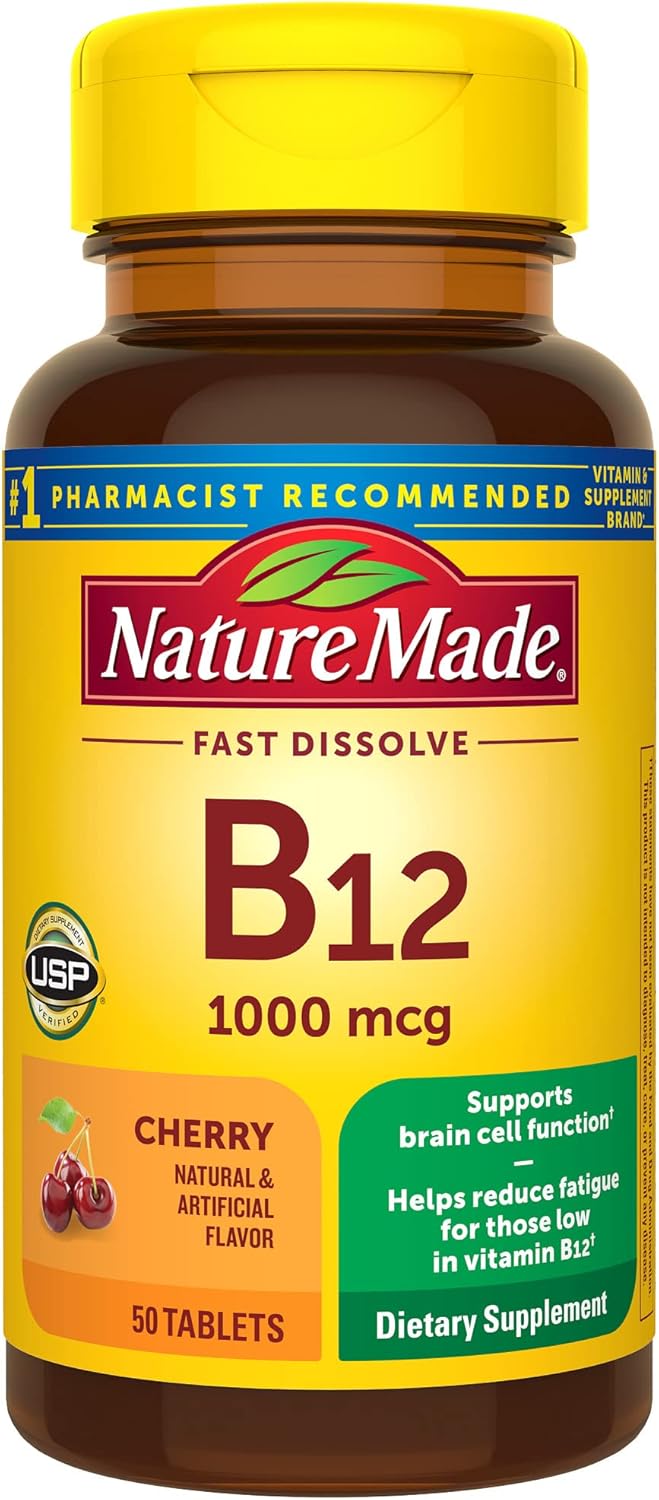
Is Nature Made Vitamin B12 1000 mcg Tablets Safe?
Generic: Vitamin B12 (Cyanocobalamin)
Generally yes, Nature Made Vitamin B12 1000 mcg tablets are considered very safe for most individuals. Vitamin B12 is a water-soluble vitamin, meaning any excess is typically flushed out of the body, minimizing the risk of toxicity. It's a crucial supplement for preventing or treating B12 deficiency.
Who Should Avoid or Consult First
- Individuals with a known allergy to cobalt or cobalamin.
- People diagnosed with Leber's disease, as B12 can potentially worsen the condition.
- Those with polycythemia vera, a blood disorder, should consult a doctor.
- People with severe kidney disease should discuss B12 supplementation with their doctor.
Common Side Effects
- Mild diarrhea — rare
- Upset stomach — rare
- Headache — rare
- Itching or rash — very rare
Interactions to Watch For
This common diabetes medication can reduce the absorption of vitamin B12, so supplementation may be needed.
These acid-reducing medications can decrease stomach acid, which is necessary for proper B12 absorption from food and supplements.
This antibiotic can interfere with how vitamin B12 affects blood cell production, especially in people with anemia.
Long-term use of colchicine can impair the absorption of vitamin B12 in the gut.
Taking very high doses of vitamin C at the exact same time as B12 can potentially degrade B12; it's best to separate doses by at least two hours.
People Also Ask
Is B12 safe during pregnancy or breastfeeding?
Yes, vitamin B12 is essential for both pregnant and breastfeeding women and their babies. It plays a vital role in fetal development and is safe to take as directed, often recommended to prevent deficiency.
Can I take B12 1000 mcg every day?
Yes, it is generally safe to take 1000 mcg of vitamin B12 daily, especially if you are at risk of deficiency. As a water-soluble vitamin, any excess is typically excreted in urine, making serious overdose unlikely.
What happens if I take too much B12?
Vitamin B12 has very low toxicity, so taking too much rarely causes serious harm. Mild side effects like diarrhea or itching might occur, but severe overdose symptoms are extremely uncommon.
Is it okay for children to take B12?
Children can take vitamin B12, but the appropriate dosage depends on their age and specific needs. Always consult a pediatrician before giving B12 supplements to children to ensure correct dosing.
Does alcohol affect B12 levels?
Yes, chronic and heavy alcohol consumption can interfere with the absorption and storage of vitamin B12 in the body. This can lead to lower B12 levels and potentially necessitate supplementation.
Bottom Line
Nature Made Vitamin B12 1000 mcg is a very safe and effective supplement for most people, particularly those at risk of deficiency. Always discuss any new supplements with your doctor or pharmacist, especially if you have underlying health conditions or are taking other medications.
References
- 1.FDA Drug Label — B Complex Liquescence
FDA DailyMed: B Complex Liquescence · FDA
- 2.Effects of Vitamin B12 Supplementation on Cognitive Function, Depressive Symptoms, and Fatigue: A Systematic Review, Meta-Analysis, and Meta-Regression.
Markun S, Gravestock I, Jäger L, et al., Nutrients, 2021 · PubMed
- 3.Vitamin B12 absorption and malabsorption.
Guéant JL, Guéant-Rodriguez RM, Alpers DH, Vitamins and hormones, 2022 · PubMed
- 4.Efficacy of different routes of vitamin B12 supplementation for the treatment of patients with vitamin B12 deficiency: A systematic review and network meta-analysis.
Abdelwahab OA, Abdelaziz A, Diab S, et al., Irish journal of medical science, 2024 · PubMed
- 5.The pathophysiology of elevated vitamin B12 in clinical practice.
Andrès E, Serraj K, Zhu J, et al., QJM : monthly journal of the Association of Physicians, 2013 · PubMed
- 6.Vitamin B12 deficiency - A 21st century perspective .
Shipton MJ, Thachil J, Clinical medicine (London, England), 2015 · PubMed
Want the full pharmacist analysis?
See full review of Nature Made Vitamin B12 1000 mcg TabletsEducational content based on FDA labeling, published research, and pharmacist review. Not a substitute for individualized medical advice.