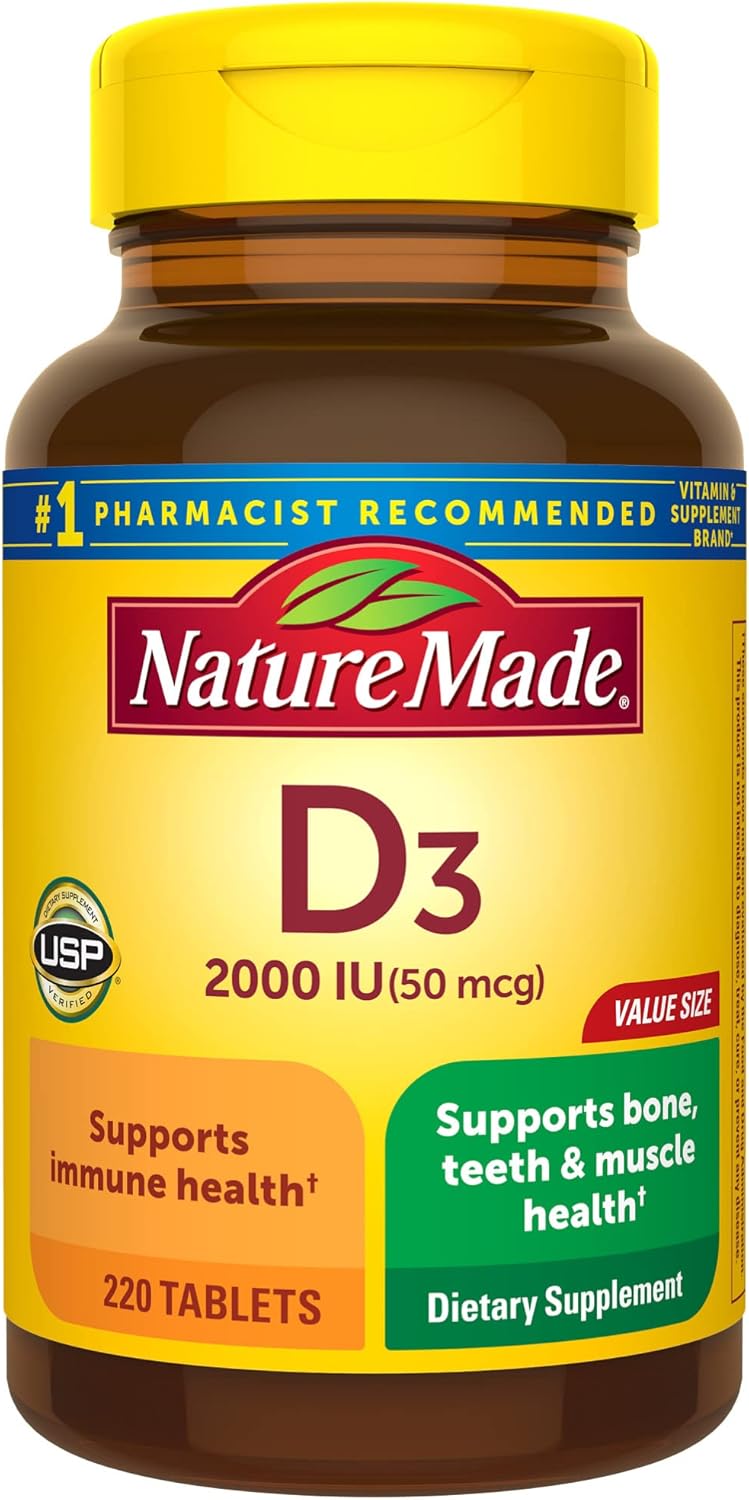
Is Nature Made Vitamin D3 Safe?
Generic: cholecalciferol
Generally yes, Nature Made Vitamin D3 is safe for most people when taken at recommended doses. It's an essential nutrient that supports bone health and immune function. However, like any supplement, taking too much can lead to adverse effects.
Who Should Avoid or Consult First
- People with hypercalcemia (high blood calcium levels)
- Individuals with certain kidney diseases or conditions affecting calcium metabolism
- People with sarcoidosis or other granulomatous diseases
- People taking certain medications that interact with Vitamin D3
Common Side Effects
- At recommended doses, Nature Made Vitamin D3 rarely causes side effects. However, taking excessively high amounts can lead to symptoms of vitamin D toxicity, which include nausea, vomiting, weakness, loss of appetite, frequent urination, and constipation.
Interactions to Watch For
These medications can increase blood calcium levels when taken with vitamin D, raising the risk of hypercalcemia.
Corticosteroids can reduce the absorption and metabolism of vitamin D, potentially lowering its effectiveness.
Some seizure medications can increase the breakdown of vitamin D in the body, leading to lower vitamin D levels.
These medications can interfere with the absorption of fat-soluble vitamins like D3, reducing its effectiveness.
People Also Ask
Is it safe to take Vitamin D3 every day long-term?
Yes, it is generally safe to take Vitamin D3 daily long-term at recommended doses, especially if you have a diagnosed deficiency or limited sun exposure. Regular monitoring of your vitamin D levels by a doctor is advisable to ensure you maintain optimal levels without exceeding safe limits.
Can pregnant women take Nature Made Vitamin D3?
Yes, Vitamin D is important during pregnancy for both mother and baby's bone health and development. However, pregnant or breastfeeding women should always consult their doctor to determine the appropriate dosage, as individual needs can vary and excessive intake should be avoided.
What happens if you take too much Vitamin D3?
Taking excessively high doses of Vitamin D3 can lead to vitamin D toxicity, a condition called hypervitaminosis D. Symptoms can include nausea, vomiting, weakness, frequent urination, and in severe cases, kidney damage or heart rhythm problems due to dangerously high calcium levels in the blood. Always stick to the recommended dosage.
Bottom Line
Nature Made Vitamin D3 is a safe and effective supplement for most adults when taken as directed. Always follow dosage instructions and consult with a healthcare professional, especially if you have underlying health conditions or are taking other medications, to ensure it's right for you.
References
- 1.FDA Drug Label — Bone Liquescence
FDA DailyMed: Bone Liquescence · FDA
- 2.FDA Drug Label — Hatmanlabs Vitamin D3 K2 with Coconut Oil 120 Softgels
FDA DailyMed: Hatmanlabs Vitamin D3 K2 with Coconut Oil 120 Softgels · FDA
- 3.Association between vitamin D supplementation and mortality: systematic review and meta-analysis.
Zhang Y, Fang F, Tang J, et al., BMJ (Clinical research ed.), 2019 · PubMed
- 4.Vitamin D and Risk for Type 2 Diabetes in People With Prediabetes : A Systematic Review and Meta-analysis of Individual Participant Data From 3 Randomized Clinical Trials.
Pittas AG, Kawahara T, Jorde R, et al., Annals of internal medicine, 2023 · PubMed
- 5.Sources of vitamin D for humans.
Benedik E, International journal for vitamin and nutrition research. Internationale Zeitschrift fur Vitamin- und Ernahrungsforschung. Journal international de vitaminologie et de nutrition, 2022 · PubMed
- 6.Effects of vitamin D supplements on bone mineral density: a systematic review and meta-analysis.
Reid IR, Bolland MJ, Grey A, Lancet (London, England), 2014 · PubMed
Want the full pharmacist analysis?
See full review of Nature Made Vitamin D3Educational content based on FDA labeling, published research, and pharmacist review. Not a substitute for individualized medical advice.