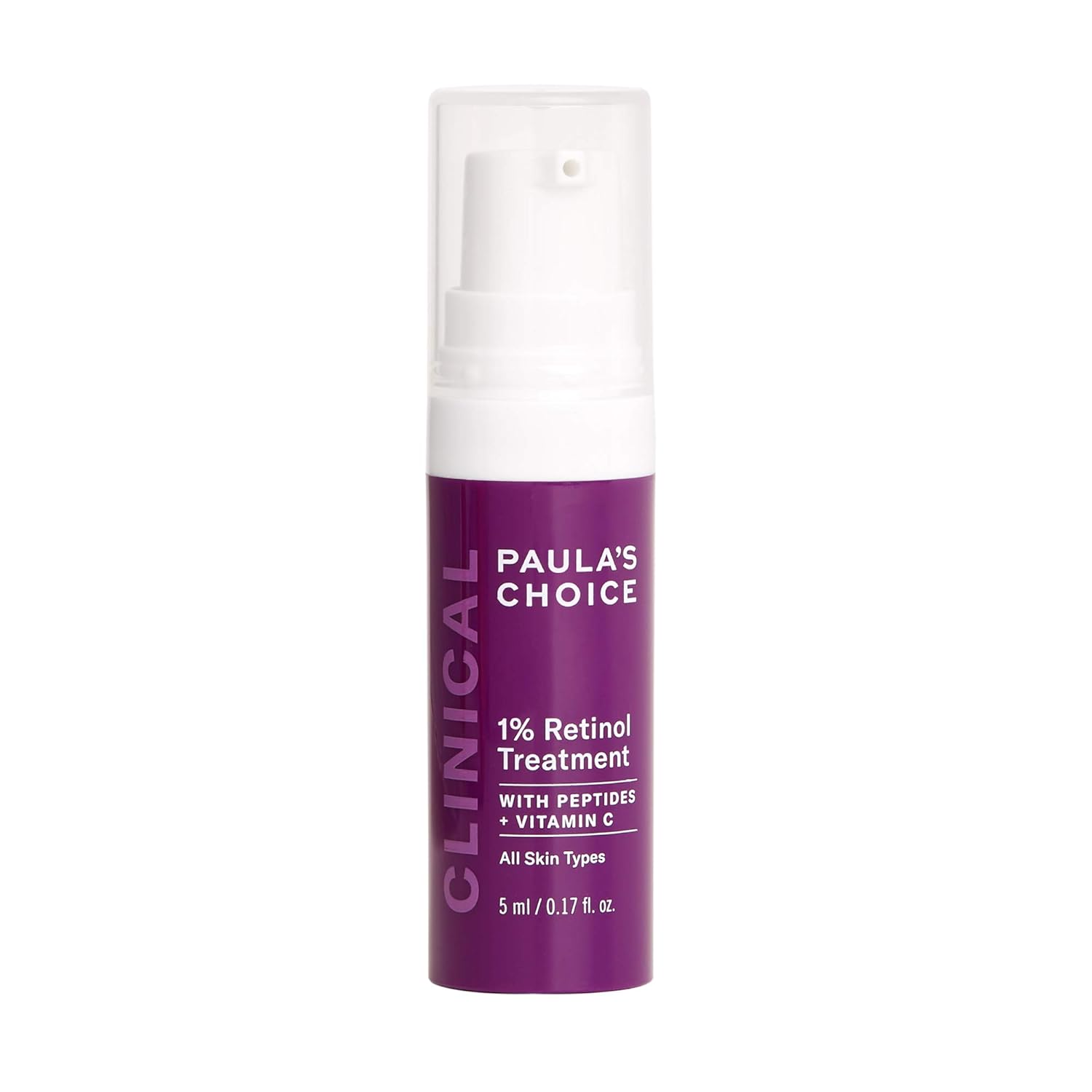
Is Paula's Choice Clinical 1% Retinol Treatment Safe?
Generic: Retinol
Generally yes, but it is a potent treatment that requires careful introduction and is not suitable for everyone. This 1% retinol product is designed for experienced users looking to address advanced signs of aging, but it can cause significant irritation if not used properly.
Who Should Avoid or Consult First
- Pregnant or breastfeeding women
- Individuals new to retinol or retinoids
- People with very sensitive, compromised, or easily irritated skin
Common Side Effects
- Redness, dryness, and peeling — very common, especially during the first few weeks of use (often called 'retinization')
- Increased sun sensitivity — always use a broad-spectrum SPF 30+ sunscreen daily
- Stinging or burning sensation — especially when first starting or if applied to irritated skin
Interactions to Watch For
People Also Ask
Is Paula's Choice 1% Retinol safe during pregnancy?
No, retinol and other retinoids are generally not recommended during pregnancy or while breastfeeding due to potential risks. It's best to avoid this product and consult your doctor for safer alternatives.
Can I use this with AHA or BHA?
Using 1% retinol with other strong exfoliants like AHAs (alpha hydroxy acids) or BHAs (beta hydroxy acids) can significantly increase irritation, redness, and peeling. It's generally advised to use them on alternate nights or at different times of day, or to consult a dermatologist for a personalized regimen.
Is this product good for sensitive skin?
No, this 1% retinol treatment is considered very potent and is generally not recommended for sensitive skin types or those new to retinoids. Starting with a lower concentration retinol product is usually advised to minimize irritation.
Can I use Paula's Choice 1% Retinol long term?
Yes, once your skin has fully adjusted and tolerates the product without significant irritation, 1% retinol can be used long-term to maintain its benefits for anti-aging and skin texture improvement. Consistent use is key for best results.
Bottom Line
This 1% retinol treatment is highly effective for experienced users targeting significant skin concerns, but it requires a slow introduction and is not suitable for beginners or sensitive skin. Always prioritize sun protection and listen to your skin to avoid over-irritation.
References
- 1.FDA Drug Label — Dove
FDA DailyMed: Dove · FDA
- 2.Human Skin Aging and the Anti-Aging Properties of Retinol.
Quan T, Biomolecules, 2023 · PubMed
- 3.Antioxidant vitamins supplementation reduce endometriosis related pelvic pain in humans: a systematic review and meta-analysis.
Zheng SH, Chen XX, Chen Y, et al., Reproductive biology and endocrinology : RB&E, 2023 · PubMed
- 4.A systematic review and meta-analysis of the effects of pasteurization on milk vitamins, and evidence for raw milk consumption and other health-related outcomes.
Macdonald LE, Brett J, Kelton D, et al., Journal of food protection, 2011 · PubMed
- 5.Retinol palmitate and ascorbic acid: Role in oncological prevention and therapy.
de Carvalho Melo-Cavalcante AA, da Rocha Sousa L, Alencar MVOB, et al., Biomedicine & pharmacotherapy = Biomedecine & pharmacotherapie, 2019 · PubMed
- 6.The importance of vitamin A in nutrition.
Dawson MI, Current pharmaceutical design, 2000 · PubMed
Want the full pharmacist analysis?
See full review of Paula's Choice Clinical 1% Retinol TreatmentEducational content based on FDA labeling, published research, and pharmacist review. Not a substitute for individualized medical advice.