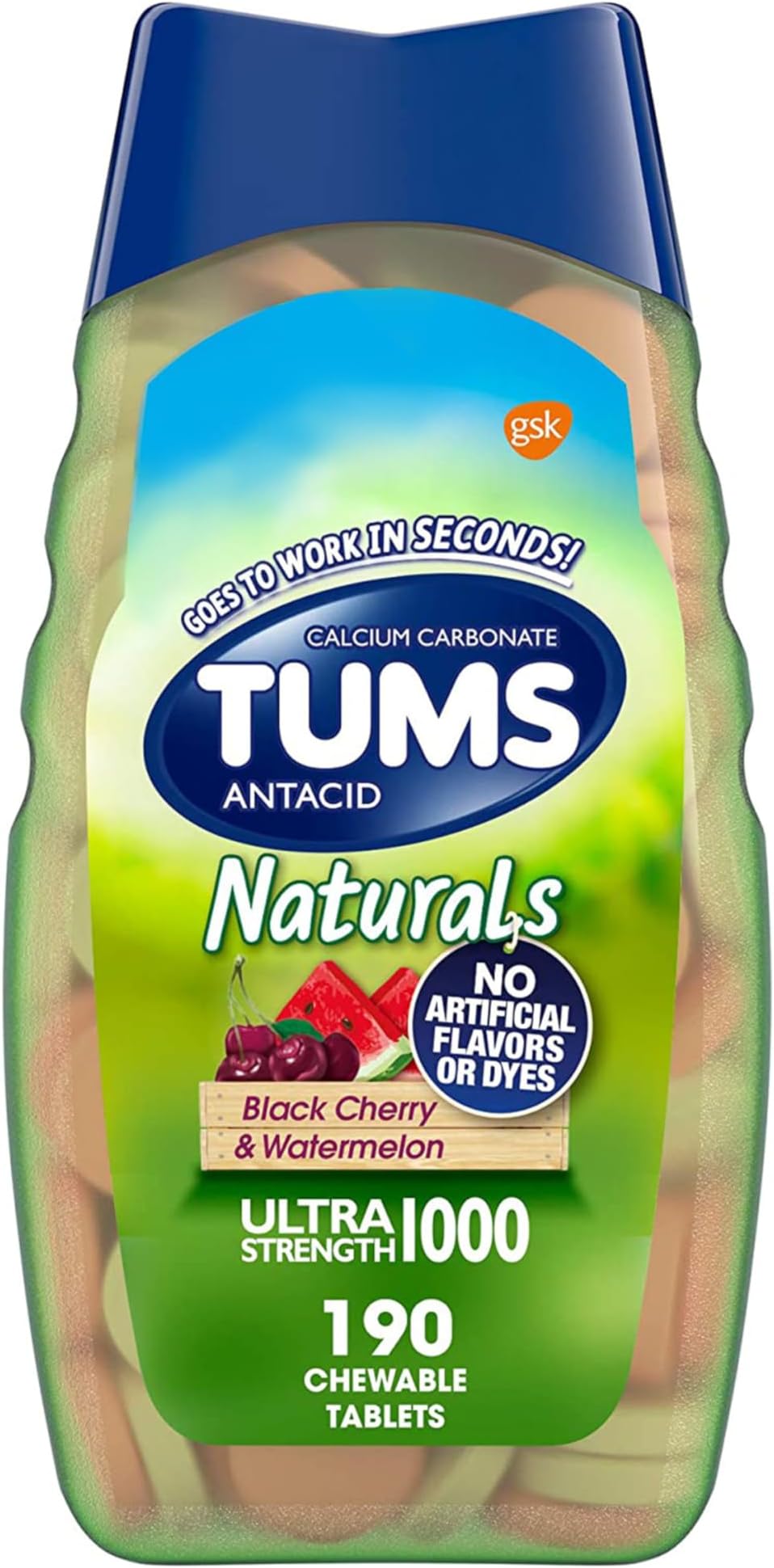
Is Tums Ultra Strength 1000 mg Antacid Chews Safe?
Generic: Calcium Carbonate
Generally yes, Tums Ultra Strength 1000 mg Antacid Chews are safe for most adults when used occasionally to relieve mild to moderate heartburn and indigestion. It works by neutralizing stomach acid quickly. However, it's not intended for daily or long-term use, and frequent heartburn should be discussed with a doctor.
Who Should Avoid or Consult First
- People with kidney disease or impaired kidney function
- Individuals with high calcium levels (hypercalcemia)
- Those with a history of kidney stones
- Children under 12 years old, unless directed by a doctor
- People taking certain medications that can interact with calcium carbonate
Common Side Effects
- Constipation — reported in some users, especially with higher doses or prolonged use
- Gas or bloating
- Stomach upset or nausea
- Diarrhea (less common than constipation)
Interactions to Watch For
Calcium can bind to these medications in the stomach, preventing your body from absorbing them properly.
Tums can reduce the absorption of thyroid medication, making it less effective.
Calcium can interfere with the absorption of these bone-strengthening drugs.
Calcium can decrease the absorption of iron, making the supplement less effective.
Combining these can increase calcium levels in the blood, potentially leading to hypercalcemia.
People Also Ask
Can pregnant women take Tums?
Yes, Tums is generally considered safe for occasional use during pregnancy to relieve heartburn, and it's often recommended by doctors. Calcium is also an important nutrient during pregnancy. However, always check with your doctor before starting any new medication while pregnant.
Is it safe to take Tums every day?
No, Tums is not meant for daily, long-term use. Frequent daily use can lead to too much calcium in your blood, kidney stones, or a condition called milk-alkali syndrome. If you have heartburn often, you should see a doctor to find out the cause and get appropriate treatment.
What happens if I take too many Tums?
Taking too many Tums can lead to side effects like severe constipation, stomach pain, nausea, and vomiting. In extreme cases or with chronic overuse, it can cause high calcium levels in the blood, kidney problems, and other serious issues. Always follow the dosing instructions on the label.
Can children use Tums for heartburn?
Tums Ultra Strength 1000 mg is generally not recommended for children under 12 years old unless specifically advised by a doctor. Lower strength Tums products may be suitable for older children, but it's best to consult a pediatrician for appropriate dosing and to rule out other causes of heartburn in children.
Can I drink alcohol with Tums?
There's no direct interaction between Tums and alcohol. However, alcohol can irritate your stomach and worsen heartburn symptoms, making Tums less effective or necessary more often. It's best to limit alcohol intake if you're experiencing heartburn.
Bottom Line
Tums Ultra Strength 1000 mg Antacid Chews are a safe and effective option for quick relief of occasional heartburn. If you experience frequent, severe, or persistent heartburn, or need to use Tums regularly, consult your doctor to address the underlying cause.
References
- 1.FDA Drug Label — EMF Protect and Balance
FDA DailyMed: EMF Protect and Balance · FDA
- 2.Ocean acidification: the other CO2 problem.
Doney SC, Fabry VJ, Feely RA, et al., Annual review of marine science, 2009 · PubMed
- 3.Hypoparathyroidism.
Gafni RI, Collins MT, The New England journal of medicine, 2019 · PubMed
- 4.Calcium Carbonate.
Al Omari MM, Rashid IS, Qinna NA, et al., Profiles of drug substances, excipients, and related methodology, 2016 · PubMed
- 5.Bioconcrete-Enabled Resilient Construction: a Review.
Tyagi G, Lahoti M, Srivastava A, et al., Applied biochemistry and biotechnology, 2024 · PubMed
- 6.Nineteenth Century Amorphous Calcium Carbonate.
Kahr B, Sburlati S, Comes J, et al., Crystal growth & design, 2024 · PubMed
Want the full pharmacist analysis?
See full review of Tums Ultra Strength 1000 mg Antacid ChewsEducational content based on FDA labeling, published research, and pharmacist review. Not a substitute for individualized medical advice.